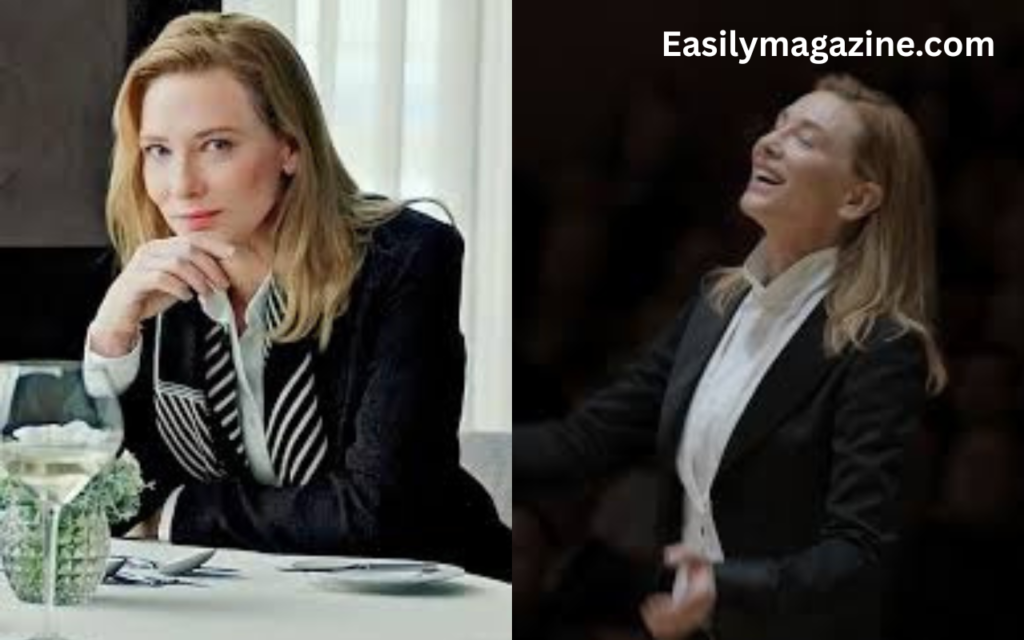

Some fictional characters feel so authentic that audiences begin searching for them as if they were real people. Lydia Tár is one of those unforgettable names. Introduced in the 2022 psychological drama Tár, Lydia Tár became one of the most discussed figures in film because of how powerfully her story reflected ambition, genius, authority, and personal collapse. Many viewers genuinely wondered whether she was a real conductor because the film presented her life with remarkable realism.
Table of Contents
TogglePortrayed by Cate Blanchett and created by filmmaker Todd Field, Lydia Tár is shown as a world-famous conductor, composer, and intellectual at the peak of her career. She is described as the first female chief conductor of a major German orchestra and one of the rare EGOT winners in the arts world. Her life appears polished, disciplined, and untouchable—until serious allegations begin to destroy everything she built.
What makes Lydia Tár so compelling is not just her professional brilliance, but the moral complexity behind it. She is admired, feared, respected, and questioned all at once. Her story is not simply about success or failure—it is about how power shapes identity and how reputation can collapse faster than it was built. Through her journey, the film asks difficult questions about art, accountability, and the true cost of greatness.
Quick Facts About Lydia Tár
| Field | Details |
|---|---|
| Full Name | Lydia Tár |
| Birth Name | Linda Tarr |
| Known As | Lydia Tár |
| Profession | Composer, Conductor, Musician, Author |
| Famous For | Main character of Tár (2022 film) |
| Portrayed By | Cate Blanchett |
| Creator | Todd Field |
| Birthplace | Staten Island, New York (fictional backstory) |
| Nationality | American |
| Residence | Berlin, Germany |
| Partner | Sharon Goodnow |
| Child | Petra |
| Net Worth | Fictionally portrayed as highly wealthy |
| Major Career Role | Chief conductor of a major German orchestra |
| Major Achievement | EGOT winner (fictional storyline) |
| Book | Tár on Tár |
| Social Media | No official accounts (fictional character) |
| Film Release Year | 2022 |
Who Is Lydia Tár?
Lydia Tár is the central fictional character of the acclaimed film Tár, a psychological drama set in the elite and demanding world of classical music. She is introduced as one of the most respected composer-conductors alive, someone whose name carries enormous weight in artistic institutions across the world. At the beginning of the film, she is preparing for a major live recording of Gustav Mahler’s Fifth Symphony, a project seen as the final masterpiece in an already legendary career.
She is also presented as a public intellectual—someone who writes books, gives interviews, teaches students, and shapes cultural conversations beyond music. Her memoir, Tár on Tár, adds to her image as a thinker whose opinions matter just as much as her performances. She is introduced not as a celebrity in the pop-culture sense, but as an institution within high art and classical performance.
What makes her unforgettable is that she is never written as simply good or bad. She is charismatic but intimidating, brilliant but controlling, inspiring but deeply flawed. This balance makes her feel real. Many viewers searched online to ask if Lydia Tár was based on a real person, proving how convincingly the film built her world.
Early Life and Family Background
According to the film’s fictional backstory, Lydia Tár was born as Linda Tarr in Staten Island, New York. This detail is important because it reveals that the glamorous and globally respected “Lydia Tár” was not her original identity. She reinvented herself completely, even changing her name into something more refined, memorable, and powerful. Her transformation reflects someone who understood that success often requires performance as much as talent.
Her early years suggest a person shaped by ambition and a desire to escape limitation. She did not come from the elite European classical world she later ruled. Instead, she built her place there through discipline, education, and relentless self-control. She learned how institutions worked and how powerful people protected their status.
This background helps explain why control became central to her personality. Lydia does not trust chaos or emotional uncertainty. She values precision, structure, and influence. Every part of her adult life—from her appearance to her professional relationships—feels designed rather than accidental. Her past shaped someone determined never to be ordinary again.
Education and Musical Training
Lydia Tár is portrayed as exceptionally educated, not only as a conductor but also as a scholar and cultural thinker. She is described as a virtuoso pianist, composer, ethnomusicologist, and someone deeply trained in the history and philosophy of music. Her professional image is built on both talent and intellectual authority, making her more than just a performer.
The film also suggests that she was mentored by legendary figures, including references to Leonard Bernstein, which adds enormous prestige to her background. She speaks about music with academic precision and often treats conducting not simply as performance, but as philosophy. Every gesture, pause, and interpretation matters to her because she sees music as a form of power and truth.
One of the most discussed moments in the film is her masterclass at Juilliard, where she debates modern ideas about separating art from artists. That scene became symbolic of the film’s larger themes. Lydia’s education shaped her into someone who uses knowledge as influence. She does not simply teach music—she dominates the room through intellect.
Career Rise and Professional Success
Lydia Tár reaches the highest level of a profession historically dominated by men. She becomes the first female chief conductor of a major German orchestra, a breakthrough that turns her into both a symbol of excellence and a sign of progress in classical music. She is addressed by colleagues as “maestro,” a title that reflects both respect and authority.
Her achievements go even further. The film presents her as one of the rare EGOT winners—someone who has won an Emmy, Grammy, Oscar, and Tony. This instantly places her among the most celebrated artistic figures in the world. In addition to conducting, she writes books, composes music, and influences the future of major institutions through mentorship and leadership.
Her professional success also depends on understanding hierarchy. Lydia carefully manages assistants, students, donors, and musicians around her. She knows how to maintain power not only through talent but through relationships and institutional influence. Her career is built on mastery, but also on knowing how elite systems work from the inside.
Major Achievements and Industry Recognition
One of Lydia Tár’s greatest achievements is her preparation to complete a recording cycle of Gustav Mahler’s symphonies, particularly Mahler’s Fifth Symphony. In the world of classical music, this is treated as a major artistic milestone, the kind of project that defines a legacy. It represents not just technical skill, but artistic immortality.
Her memoir, Tár on Tár, also strengthens her reputation. It presents her not only as a musician but as a public thinker whose personal philosophy matters to the broader cultural world. She is invited to major interviews, public discussions, and intellectual events because her influence extends beyond concert halls.
The film itself became highly celebrated. Tár received six Academy Award nominations, including Best Picture, while Cate Blanchett won the BAFTA, Golden Globe, and Critics Choice Award for Best Actress for her performance as Lydia. This made the fictional character even more culturally significant because audiences treated her like a real public figure.
Scandal, Controversy, and Personal Collapse
At the height of her success, Lydia Tár’s carefully protected image begins to fall apart. Allegations emerge involving manipulation, emotional abuse, and inappropriate relationships with younger women whose careers she influenced. A former protégée becomes central to the controversy, and the public begins to question the ethics behind her success.
The film does not show scandal as a sudden event, but as a slow unraveling. Emails, edited videos, damaged trust, and private guilt all combine to destroy her authority. A manipulated video from her Juilliard class goes viral, reshaping public opinion faster than she can respond. Her reputation, once carefully controlled, becomes impossible to protect.
This part of her story made the film deeply relevant to modern audiences. It was not simply about “cancel culture,” but about the uncomfortable truth that brilliance and harm can exist in the same person. The film asks whether achievement should protect someone from consequences—and Lydia Tár becomes the center of that moral debate.
Personal Life and Relationships
Behind the public image of authority, Lydia’s personal life is equally complex. She lives in Berlin with her partner Sharon Goodnow, who is also the concertmaster of her orchestra, and together they are raising their daughter Petra. Their relationship combines love, professional tension, and emotional imbalance.
Her connection with Petra reveals one of the few softer parts of her personality. In scenes with her daughter, Lydia appears protective and emotionally vulnerable in ways she rarely allows in public. These moments remind viewers that even deeply flawed individuals can still show genuine care and affection.
At the same time, her relationships often reflect the same power dynamics seen in her professional life. She struggles with honesty, trust, and emotional accountability. People close to her are often drawn into the same system of control that defines her career. This makes her personal world emotionally rich, but unstable.
Net Worth and Lifestyle
Because Lydia Tár is fictional, there is no officially confirmed net worth. However, the film clearly presents her as someone living within extraordinary wealth and cultural privilege. She works with global institutions, publishes books, leads elite performances, and moves among powerful donors and artistic leaders.
Her realistic income sources would include orchestra leadership, international guest conducting, music composition, royalties, publishing deals, speaking engagements, and consulting in major artistic foundations. Someone at her fictional level would be financially secure and highly influential within cultural circles.
Interestingly, her lifestyle is not built around flashy luxury. Instead, it reflects precision and control. Her home, clothing, routines, and even silence feel carefully chosen. She values authority more than display. Her wealth is expressed through access, reputation, and influence rather than obvious extravagance.
Social Media Presence and Public Influence
Lydia Tár does not have personal social media accounts because she is a fictional character, but her public image functions like a modern professional brand. She appears through interviews, public lectures, institutional publicity, and professional recognition rather than personal online sharing.
The film cleverly shows how reputation in the modern world can be destroyed online even without active participation. The viral classroom video becomes a major turning point in her downfall. It proves that public image is no longer controlled only by interviews and official statements—digital culture rewrites stories instantly.
This contrast between old-world artistic prestige and modern internet judgment is one of the strongest themes in the film. Lydia built her reputation through traditional institutions, but the internet destroys it without permission. Her story reflects how visibility and vulnerability now exist together for every public figure.
Legacy and Cultural Impact
Even after the release of Tár, Lydia Tár remained a major topic of conversation because audiences could not stop debating her. Was she a villain, a victim, or a mirror of larger systems? Was the film about abuse of power, artistic obsession, or the collapse of identity? Few fictional characters generate that level of discussion.
Critics praised how realistic and psychologically layered the character felt. Many viewers searched for interviews, biographies, and real-life inspirations because they believed Lydia must be based on a real conductor. That confusion became proof of how successfully the character was written and performed.
Her legacy matters because she represents more than one person. Lydia Tár symbolizes ambition without limits, the seduction of authority, and the danger of believing success makes someone untouchable. Her story continues because it reflects real human systems far beyond cinema.
Conclusion
Lydia Tár may not be a real person, but her story feels deeply real because it reflects truths people recognize in leadership, ambition, and public life. She represents extraordinary brilliance, but also the danger of believing talent places someone above responsibility. Her rise is inspiring, and her fall is deeply unsettling.
What makes her unforgettable is that she forces audiences to confront difficult questions. Can genius excuse misconduct? Can reputation survive truth? Can power exist without corruption? These are not simple questions, and the film wisely refuses simple answers.
As Lydia Tár shapes conversations about art, accountability, and identity, her story stands as a reminder that legacy is never built on achievement alone. It is built on character, choices, and the courage to remain human even at the height of success. In that way, her fictional journey becomes a powerful lesson about resilience, ambition, and the fragile balance between greatness and grace.