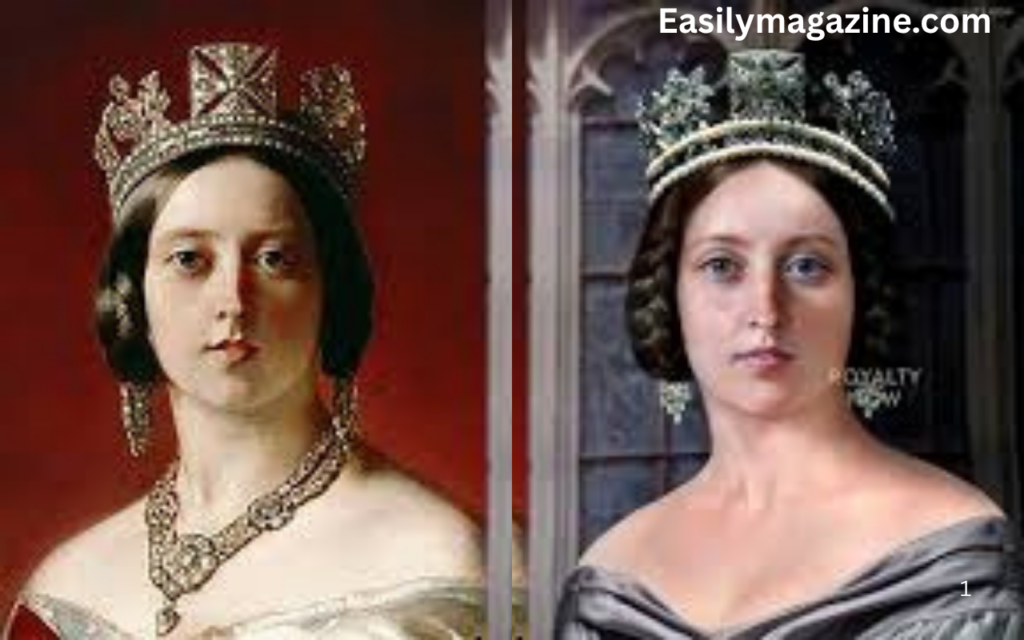

Early Life of Young Queen Victoria
Queen Victoria was born as Alexandrina Victoria on May 24, 1819, at Kensington Palace in London, England. At the time of her birth, few people expected that she would one day become one of the most famous monarchs in history. She was the daughter of Prince Edward, Duke of Kent and Strathearn, and Princess Victoria of Saxe-Coburg-Saalfeld. Her father died when she was only eight months old, leaving her mother to raise her alone. This early loss would have a lasting impact on Victoria’s childhood and personality.
Table of Contents
ToggleVictoria spent much of her childhood under the strict supervision of her mother and her mother’s adviser, Sir John Conroy. The system they created, later known as the Kensington System, controlled nearly every aspect of her daily life. She was rarely allowed to be alone, had few friends her own age, and lived under constant observation. Although intended to prepare her for future responsibilities, the arrangement often made her feel isolated and unhappy.
Despite these restrictions, Victoria developed a strong sense of independence. She enjoyed studying languages, history, literature, and politics. Her education helped shape her into a knowledgeable and confident young woman. Even as a child, she demonstrated determination and intelligence, qualities that would later define her reign and help her navigate the complex world of royal leadership.
Family Background and Royal Heritage
Victoria belonged to the House of Hanover, a royal dynasty that had ruled Britain since the early eighteenth century. Her grandfather was King George III, one of Britain’s most well-known monarchs. Although Victoria was not originally expected to inherit the throne, circumstances within the royal family gradually changed her future. Several relatives died without surviving legitimate heirs, moving her closer to becoming queen.
Her mother, the Duchess of Kent, was deeply involved in her upbringing and sought to protect her daughter from political influences. However, Victoria often felt frustrated by her mother’s strict control. Their relationship became strained during her teenage years, especially as Victoria grew increasingly aware that she might one day rule the nation herself.
The young princess also benefited from connections to many European royal families. These relationships later played an important role in international diplomacy and royal marriages. Victoria’s family network extended across Europe, laying the foundation for her future reputation as the “Grandmother of Europe.”
The Young Princess Discovers Her Destiny
As Victoria grew older, it became increasingly clear that she was likely to inherit the British throne. According to historical accounts, she learned about her place in the line of succession while studying a family tree. Upon realizing her future responsibilities, she reportedly declared, “I will be good.” This simple statement revealed a sense of duty that would remain with her throughout her life.
The possibility of becoming queen motivated Victoria to take her education seriously. She understood that ruling a kingdom required knowledge, discipline, and maturity. Her tutors encouraged her intellectual development, and she developed a keen interest in government and public affairs. Unlike many young women of her era, Victoria received an education designed to prepare her for leadership.
By her late teenage years, Victoria had become increasingly confident. She wanted greater independence and resisted attempts by Sir John Conroy to maintain control over her life. This growing determination foreshadowed the strong leadership qualities she would later display as queen.
Becoming Queen at the Age of Eighteen
On June 20, 1837, King William IV died, and eighteen-year-old Victoria became Queen of the United Kingdom. The transition was dramatic and immediate. One day she was a young princess living under supervision; the next she was the ruler of one of the world’s most powerful nations. Her accession marked the beginning of a new era in British history.
Victoria’s first actions as queen demonstrated her desire for independence. She moved away from the influence of her mother and Sir John Conroy and established herself as an autonomous monarch. She insisted on making her own decisions and quickly gained the respect of political leaders and the public alike.
The young queen’s freshness and energy appealed to many people. Britain had experienced political uncertainty in previous years, and Victoria’s accession brought renewed optimism. Her youth, intelligence, and commitment to duty helped strengthen the monarchy’s reputation and popularity.
Love, Courtship, and Marriage to Prince Albert
One of the most important chapters in Victoria’s life began when she renewed her acquaintance with Prince Albert of Saxe-Coburg and Gotha. Albert was her first cousin, and the two quickly developed a strong bond based on mutual affection, respect, and shared interests. Victoria was deeply impressed by Albert’s intelligence, character, and dedication.
Because she was the reigning monarch, royal protocol required Victoria to propose marriage. In October 1839, she asked Albert to marry her, and he accepted. Their wedding took place on February 10, 1840, at St. James’s Palace in London. The event attracted enormous public attention and symbolized stability during the early years of her reign.
The marriage proved to be one of the most successful royal partnerships in history. Albert became Victoria’s closest adviser and confidant. His influence extended into education, science, industry, and government affairs, helping shape many aspects of Victorian Britain. Together they created a model of family life that greatly influenced public values during the nineteenth century.
Family Life and Motherhood
Victoria and Albert had nine children between 1840 and 1857. Their family became one of the most famous royal households in Europe. The couple worked hard to create a loving domestic environment, despite the many demands of public life. Their children were raised with strong expectations regarding education, discipline, and public service.
The queen often balanced her responsibilities as monarch with her role as a mother. Although she sometimes found pregnancy and child-rearing difficult, she remained deeply involved in her children’s lives. Her extensive correspondence provides valuable insights into her concerns, hopes, and expectations as a parent.
As her children married into royal families across Europe, Victoria’s influence spread far beyond Britain. Through these marriages, she became connected to numerous European monarchies and eventually earned the famous nickname “Grandmother of Europe.” This network of royal descendants would shape European history for generations.
Notable Facts About Victoria’s Family:
- She had 9 children.
- She became grandmother to 42 grandchildren.
- Her descendants married into many European royal houses.
- Her eldest son later became King Edward VII.
Young Queen Victoria’s Influence on Britain
Victoria’s reign coincided with one of the most transformative periods in British history. The Industrial Revolution accelerated economic growth, railways expanded across the country, and technological innovations changed everyday life. While political leaders managed many of these developments, Victoria provided a symbol of stability and continuity.
The Victorian Era became associated with values such as hard work, family responsibility, education, and public service. Although historians recognize that Victorian society was complex and often contradictory, Queen Victoria herself became a powerful symbol of these ideals. Her image appeared throughout the British Empire and helped strengthen national identity.
Under Victoria’s reign, the monarchy gradually evolved into the more constitutional and ceremonial institution familiar today. Her ability to adapt to changing political realities helped ensure the monarchy’s long-term survival and relevance in a modern democratic society.
Tragedy and Personal Strength
The happiest period of Victoria’s life was undoubtedly her marriage to Prince Albert. However, tragedy struck in 1861 when Albert died unexpectedly at the age of forty-two. His death devastated the queen and marked a turning point in her personal life. She entered a prolonged period of mourning that lasted for the remainder of her life.
Victoria’s grief was profound and highly visible. She wore black clothing for decades and surrounded herself with reminders of her late husband. Many public appearances were reduced during this period, leading some critics to question her absence from public life. Nevertheless, she continued to fulfill her constitutional duties.
Despite her sorrow, Victoria demonstrated remarkable resilience. She eventually regained public popularity and continued serving as a respected national figure. Her ability to persevere through personal tragedy became an important part of her legacy and contributed to the admiration she inspired among her subjects.
Legacy of the Young Queen Who Changed History
When historians look back at Queen Victoria’s early years, they often focus on the remarkable transformation she achieved. A lonely and sheltered princess became one of the most influential monarchs in modern history. Her journey illustrates how determination, education, and resilience can help individuals overcome difficult circumstances.
The Victorian Age remains one of the most studied periods in world history. Its achievements in industry, science, culture, and global influence continue to shape modern society. Victoria’s name became permanently linked with this era because of the stability and continuity she provided during decades of dramatic change.
Today, Queen Victoria is remembered not only as a monarch but also as a symbol of perseverance and duty. Her life story continues to inspire readers, historians, and leaders around the world. From her difficult childhood to her extraordinary reign, Victoria’s journey remains a powerful reminder that strong character and dedication can leave a lasting impact on history.