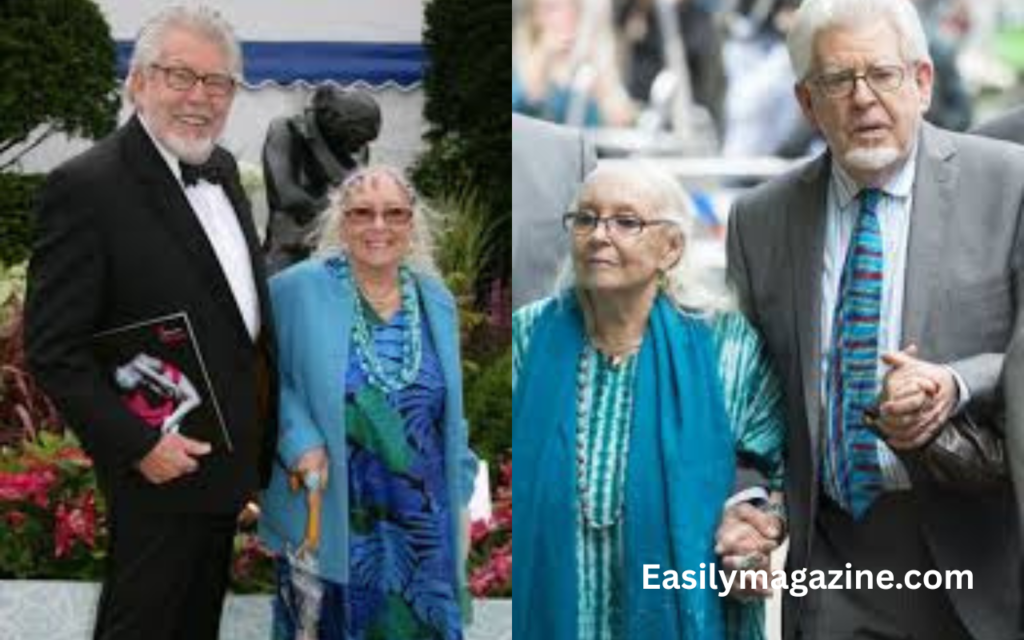

Some lives are lived loudly, filled with fame and public applause. Others unfold quietly, shaped by creativity, resilience, and deeply personal choices. Alwen Hughes, best known as the wife of Rolf Harris, lived the latter kind of life. While the world watched her husband rise to fame and later fall into scandal, Alwen remained a steady, private presence—an artist, a mother, and a woman whose story deserves to be understood on its own terms.
Table of Contents
ToggleHer life is not just a footnote in someone else’s biography. It is a story of artistic passion, enduring loyalty, and the emotional complexity of standing firm during turbulent times. From her early days as a sculptor to her final years marked by reflection and health struggles, Alwen Hughes lived a life layered with meaning, contradiction, and quiet dignity.
Quick Facts About Alwen Hughes
| Field | Details |
|---|---|
| Full Name | Alwen Hughes (also known as Alwen Harris) |
| Date of Birth | 26 December 1931 |
| Age at Death | 92 |
| Birthplace | Edmonton, Middlesex, England |
| Nationality | British |
| Profession | Sculptor and Jeweller |
| Famous For | Wife of Rolf Harris |
| Husband | Rolf Harris (m. 1958–2023) |
| Children | 1 daughter – Bindi Harris |
| Net Worth | Estimated estate approx. £3–4 million |
| Death | 12 September 2024, Bray, Berkshire |
| Social Media | None (private lifestyle) |
Early Life and Artistic Foundations
Alwen Hughes was born on 26 December 1931 in Edmonton, Middlesex, at a time when Britain was still recovering from economic uncertainty and on the brink of war. Her early years were shaped by a culture that valued resilience and practicality, but also quietly nurtured creativity. From a young age, she showed a deep interest in art, particularly in forms that involved hands-on craftsmanship like sculpture and jewellery design.
Growing up in an environment where resources were limited, she learned to appreciate the beauty of simplicity. This early exposure to constraint likely influenced her artistic style, which later became known for its detail and originality. Her interest in sculpture was not just a hobby—it became a defining part of her identity, something that grounded her even when life around her became complicated.
Her formative years also instilled in her a sense of independence. Although little is publicly documented about her parents or siblings, her path into art suggests a supportive or at least encouraging environment. These early influences helped shape her into a woman who valued both creativity and personal conviction—traits that would become essential in her later life.
Education and Meeting Rolf Harris
Alwen’s journey took a defining turn when she enrolled in art school in London. It was here that she met Rolf Harris, who had come from Australia with ambitions of building a creative career. Both were young, passionate, and deeply immersed in artistic exploration, which made their connection almost inevitable.
Their relationship was built on shared creativity. They were not just romantic partners but also collaborators in thought, often inspiring each other’s artistic ideas. This mutual understanding gave their bond a unique depth, one that went beyond ordinary relationships. Art was their language, and through it, they connected on a profound level.
In 1958, they married in London, beginning a partnership that would last over six decades. Their marriage was not only long but also complex, evolving through different phases of fame, controversy, and personal challenges. Yet, at its core, it began with something simple and genuine—a shared love for art and expression.
Marriage, Family, and Life in the Spotlight
Marriage brought Alwen into a life that gradually became more public. As Rolf Harris rose to fame in the 1960s and beyond, she found herself connected to a growing celebrity presence. Despite this, she never fully embraced the spotlight, choosing instead to remain in the background and focus on her personal life.
In 1964, the couple welcomed their daughter, Bindi Harris, who would later follow her own creative path. Family life became central to Alwen’s world, and she worked to create a stable, nurturing environment despite the pressures that came with her husband’s fame. She balanced the demands of being a public figure’s spouse with the responsibilities of motherhood.
Living alongside fame is rarely simple. Public attention, media scrutiny, and constant exposure can strain even the strongest relationships. Yet Alwen managed to maintain a sense of normalcy. Her ability to stay grounded, even as her husband became a household name, reflects her inner strength and commitment to family life.
Career as a Sculptor and Jeweller
While often identified as a celebrity spouse, Alwen Hughes had her own artistic career that deserves recognition. She worked as a sculptor and jeweller, creating pieces that reflected her individuality and creative vision. Her work, though not widely commercialized, was respected within artistic circles.
Her approach to art was deeply personal. She did not chase fame or public recognition but instead focused on the craft itself. This dedication allowed her to develop a distinctive style, one that emphasized detail, texture, and emotional expression. Her creations were not just objects—they were reflections of her inner world.
Interestingly, her artistic identity remained separate from her husband’s fame. While both were artists in their own ways, Alwen chose a quieter path. This separation allowed her to preserve her individuality, even while living in the shadow of a globally recognized figure.
Challenges, Controversy, and Loyalty
The most difficult chapter of Alwen Hughes’s life came in 2014, when Rolf Harris was convicted of multiple sexual offences. The case shocked the public and dramatically changed the way he—and by extension, his family—were perceived.
During this time, Alwen made a choice that defined her public image: she stood by her husband. She attended court proceedings and remained with him throughout his imprisonment. This decision drew mixed reactions. Some saw it as an act of loyalty, while others viewed it as controversial or difficult to understand.
Regardless of public opinion, her actions reflected a deeply personal commitment. Loyalty, for Alwen, appeared to be rooted in decades of shared life and history. Navigating such a situation required emotional strength, resilience, and a willingness to endure criticism—all of which she demonstrated quietly, without public explanation or defense.
Personal Life, Character, and Beliefs
Alwen Hughes was known for her private and somewhat eccentric personality. She avoided media attention and rarely spoke publicly, preferring to keep her personal thoughts and experiences to herself. This privacy allowed her to maintain a sense of control over her life, even when circumstances were beyond her control.
Those who knew her described her as creative, independent, and loyal. She had a distinctive sense of style and was often remembered for her individuality. Her character was not defined by public approval but by her own values and choices.
Her daily life revolved around art, family, and personal reflection. She found meaning in simple routines and creative expression. In a world increasingly dominated by social media and public visibility, her choice to live quietly stands out as both rare and admirable.
Net Worth, Wealth, and Lifestyle
Alwen Hughes lived a financially comfortable life, largely influenced by her husband’s long career in entertainment and art. Reports suggest that her estate was valued at several million pounds, reflecting decades of accumulated wealth.
However, her lifestyle did not reflect excessive luxury. She preferred privacy and simplicity over public displays of wealth. Her focus remained on meaningful living rather than material excess, a choice that aligned with her artistic nature.
Her income sources included her own artistic work as well as shared assets from her husband’s career. Over time, especially after the controversies, their financial situation may have shifted, but she continued to live in relative comfort until her final years.
Later Years, Health, and Passing
In her later years, Alwen Hughes faced serious health challenges. She suffered from conditions such as vascular dementia and required increasing levels of care. Her health struggles marked a difficult period, especially following the death of her husband in 2023.
She continued to live in Bray, Berkshire, where she had spent much of her life. Surrounded by caregivers and family, she experienced a gradual decline in health. These final years were marked by reflection, memory, and the quiet passing of time.
Alwen Hughes died on 12 September 2024 at the age of 92. Her passing closed a chapter that had spanned nearly a century—a life that had witnessed immense change, both personally and historically.
Legacy and Lasting Influence
Alwen Hughes leaves behind a legacy that is both complex and deeply human. She was an artist who valued creativity, a wife who demonstrated unwavering loyalty, and a mother who prioritized family above all else. Her life cannot be reduced to a single narrative—it is a blend of strength, controversy, and quiet resilience.
Her story also sheds light on the experiences of those who live alongside public figures. While the world often focuses on fame and scandal, it rarely considers the personal impact on families. Alwen’s life reminds us that behind every headline is a deeply personal story.
Ultimately, her influence lies in her authenticity. She lived according to her own values, even when those values were questioned. That unwavering sense of self is perhaps her greatest legacy.
Final Reflection
Alwen Hughes lived a life that was both ordinary and extraordinary. She experienced love, creativity, hardship, and resilience in equal measure. Her journey shows that strength does not always come with recognition—it often exists quietly, in the choices we make and the values we uphold.
As Alwen Hughes shaped her life through art and loyalty, her story stands as a reminder that resilience is not about perfection but persistence. It is about continuing forward, even when the path becomes uncertain.
In the end, her legacy is not just tied to her marriage but to the way she lived—with dignity, independence, and unwavering commitment. Her story encourages us to look beyond appearances and recognize the depth of human experience that lies beneath.